After wrecking the Asian horror (come on, we do it best) with their terrible interpretations of Shutter, The Ring, The Eye, and many many more, Hollywood went on to remake Asian manga and cartoons. They've announced the characters playing in the whitewashed version of Death Note, and no surprise there, white kids everywhere. Let's remember Death Note in all its glory, played by Tatsuya Fujiwara and Ken'ichi Matsuyama.

It's as if Hollywood is listening to the complaints of racism and flicking them away like flies buzzing in their ears. I spent much of pre-chemo day binging on How To Get Away With Murder again and I am floored by its constant representation of the marginalised. Should I be this surprised? NO. Should it be this rare to find proper representation of the marginalised? NO. I've only started on season 2 this week, so I'll just talk about that.
It's as if Hollywood is listening to the complaints of racism and flicking them away like flies buzzing in their ears. I spent much of pre-chemo day binging on How To Get Away With Murder again and I am floored by its constant representation of the marginalised. Should I be this surprised? NO. Should it be this rare to find proper representation of the marginalised? NO. I've only started on season 2 this week, so I'll just talk about that.
Firstly, a Black woman as a protagonist. Not female protagonist, PROTAGONIST.
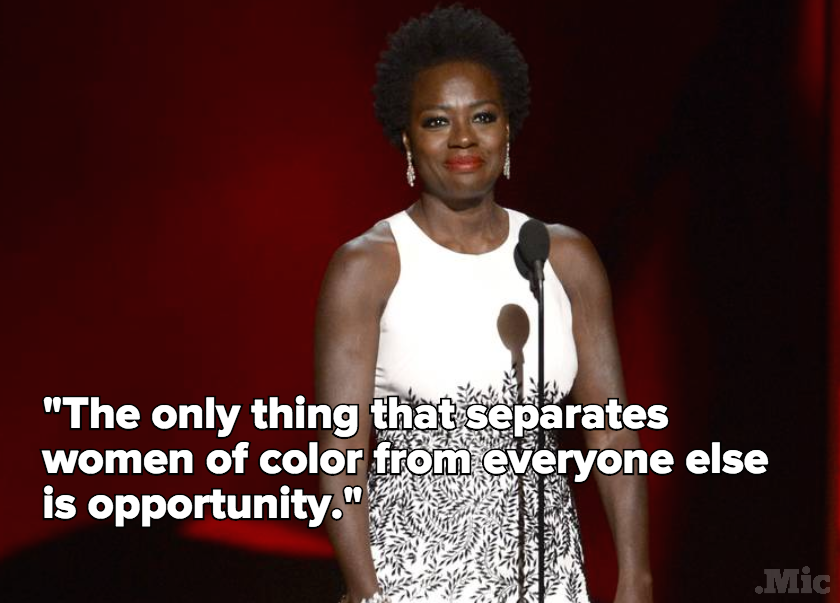
Annalise Keating (Viola Davis, all hail, all hail) is the powerful lawyer that wins every single case, the go-to person when you screw up or, I don't know, kill somebody. She does't fit the stereotypical role of the angry Black woman, nor the sassy Black woman, nor the hypersexual Black woman. While this website tells us that Annalise Keating is actually just another stereotype, let me tell you why she is not.
The site says:
The site says:
Annalise Keating from How to Get Away with Murder is a perfect example of [The Strong Black Woman]. She is icy, impenetrable, and doesn’t let the trauma she endured in the past and present affect her at all.
She (ostensibly) effortlessly take down all obstacles in her path.
Annalise’s character is unerringly steadfast. When she cries, she immediately pulls herself together. When she’s in trouble, she does whatever she needs to do to save the situation, no matter how callous.
And while this may feel like a positive stereotype, as strength is a glorified quality in our society, the Strong Black Woman trope stems from the fact that Black women have been absorbing the brunt of physical and emotional labor for not only their families, but also for the white families they were owned or employed by for centuries.
Shonda Rhimes writes characters with complexity. They are never one-dimensional or stereotypical. Yes, HTGAWM is marketed with Annalise Keating as the undefeated, all-powerful Lawyer, but Rhimes always shows the audience Keating in her most vulnerable and real. These episodes take place out of the courtroom, because DUH, professionalism. But it shows audiences that Keating is complex, weak and strong at the same time, able to put up a professional performance in the court room and in front of her interns (with the exception of Wes, god bless the boy).
In season one, we see Annalise in her most vulnerable states over and over, wig off, makeup off, tears streaming down her face.

There was even a time her mother had to come and clean her up because she was spiralling out of control after Sam's death.

Also, Keating does not operate alone, and she never has. Frank is always around to clean up the messy bits or to go deeper into snooping. One can argue that the one who settles shit is still a White male, but he is at her bidding, working for her. That says a lot for power dynamics.

Representation of Sexuality
Yes, yes, homosexuality is slowly being represented on mainstream TV, what with Ryan Murphy and Glee, right? NO. (maybe I'll write about Glee another time). So we first have Oliver and Connor, whose relationship only grow deeper and more committed as the series progresses. Not only are they more than a White girls' accessories, they are in a committed relationship and we watch their relationship grow. Also, Oliver isn't written in as a mere boyfriend to fit the quota, but he's actually exceedingly useful to the team and their cases. He's the Penelope Garcia of the team! In Season two, Rhimes also writes about HIV and how it affected the couple (while she could have done that for a hetero couple too), it shows how gay couples deal with difficult issues together, instead of where to have brunch the next morning like how most films depict them.

Spoiler alert, Annalise Keating was with a woman in the past. So Rhimes writes in sexual fluidity in Season Two! Who else to bring in than Jean Grey *_* Famke Janssen, who plays Eve Rothlow, appears as another successful lawyer from Keating's past, and the two reveal that they had once been lovers. Thing is, Rothlow admits to having feelings for Keating and asks her to move in with her. And all this was witnessed by Keating's lover, Nate Lahey. So a White dead husband, a Black boyfriend, and a White ex-girlfriend. Rhimes moves past the barriers of both sex and ethnicity over and over, breaking stereotypes and creating characters with depth and backstories.

Representation of Gender
The latest episode I watched was "Two Birds, One Millstone". It was one of the most impactful episode I've watched thus far. In this episode, Keating's friend and new client is accused of killing her husband. This friend, Professor Jill Hartford, is a transgender woman stuck in an abusive relationship. She murders her husband and stages the crime scene, and even gets her student to lie for her, because law enforcement officials are unlikely to believe trans women who act in self-defense. This episode highlighted many important issues, like how abusers can escape the law, how authorities would easily believe a White cis male but question the motives of a transgender person, how you have to protect yourself the only way you know how when authorities do not. The best thing is, they got a transgender actress to play the role, Alexandra Billings. Talk about representation! True representation is when you get the marginalised to represent themselves.

With Eddie Redmayne playing Lili Elbe (The Danish Girl, 2015), the Danish transgender woman and possibly one of the first recipients of sex reassignment surgery,

Jared Leto playing Rayon, a transgender woman in Dallas Buyer's Club (2014) for which he won 8 awards including a Golden Globe and an Oscar,

and countless of other movies who have miscast their characters, it is a damn big deal that HTGAWM casted a transgender woman to play the role. Unfortunately for the world, Hollywood knows that playing "tragic" characters will definitely get you an Oscar. Or some other award. Ask Leo to play a transgender woman and he'll surely get the Oscar he so desires. I found this article online that explains things better than I do:
Playing tragic characters is awards-bait
Hollywood is enamoured with the idea of "the tragic figure", and when you couple this with "the bravery of a male actor portraying a woman", you get awards bait. Notice that you don't get the same awards bait when a woman plays a male character; Hollywood's patriarchy considers that complementary, not brave. This rampant and pervasive Hollywood misogyny was most underlined by Jared Leto's oscar win for the horribly-offensive Dallas Buyers Club.
David Oyelowo said that Hollywood awards Black characters only when they are in tragic or subservient roles. As Selma didn't fit those molds, it wasn't rewarded. Hollywood loves the tragedy of the underprivileged as long as it fits their expectations. This is something that needs shouting from the rooftops, and it needs to stop now.
I'm tired of all the jsutifications given for why it's somehow okay for cis males to portray transgender people. We're not tragic, nor are we to be pitied; we're just normal like everyone else. Okay, we might not be standard, but who is, really? Some trans people are great, others not so much; some trans people have talent, others write for online websites. Ahem.
Representation of Ethnicity
Not only is the protagonist of HTGAWM a Black woman, the judge is also a Black woman (Barbara Eve Harris playing Judge Fiona Pruitt), and the second lead is a Black youth (Alfred Enoch playing Wes Gibbins). This is a show about justice (well it's really about how to get away with murder), but you rarely see a TV series about crime with the Black characters on the other side of the bench.
Oliver, Connor's boyfriend, is played by Conrad Ricamora. Born in Santa Maria, California, the Filipino-American is the only Asian recurring character. That is, until Amy Okuda, who plays the client Catherine Hapstall appears in Season Two.

She plays the sister of Caleb Hapstall (Kendrick Sampson), and gives what might be one of the boldest lines in the series so far. In the courtroom, Judge Fiona Pruitt decides to throw out a piece of evidence, suspicious of how the team got their hands on it. The evidence clearly shows that the witness was a racist and prejudiced against the Asian niece and Black nephew. Catherine lashes out at the judge, "You're black, out of anyone you should get it!" Startled, the judge only replies, "the sad thing is, I do." Keating looks at her and says, "someone had to say it". BOOM.
It is revealed that Caleb and Catherine are lovers, though they are adoptive siblings. This is just one of the many inter-ethnic relationships in the series. Annalise and Sam, Wes and Rebecca, Connor and Oliver, Annalise and Jean Grey, I mean Eve.
Representation is so important because the media is a huge influencer in our society. Imagine if a boy who knows he is gay, and finds it hard to relate to anyone in his life, turns on the TV and the only representation he sees are tropes with little depth or complexity. Imagine if an Asian girl living in a western country is only taught through the media that she's only good for eating rice and playing mahjong. Or a transgender person seeing only cis actors playing the roles of transgender characters. Are their voices only good for making research so others can play them? Shonda Rhimes herself is a Black woman, and look at the amount of representation in just one TV series. When the marginalised get the opportunity, other marginalised are represented too.
dear Shonda,
